
Police Brutality During Protests in San Diego: Know Your Rights
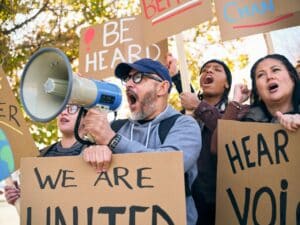 Police Brutality During Protests
Peaceful protests are protected under both the United States Constitution and California law. Yet throughout California, demonstrations occasionally result in allegations of police misconduct, excessive force, unlawful arrests, and violations of constitutional rights.
When law enforcement officers exceed their legal authority, the consequences can be devastating. Protesters may suffer serious injuries from rubber bullets, pepper spray, batons, or physical restraints. Others may be arrested despite engaging in protected First Amendment activity.
If you were injured or arrested during a protest in San Diego, you may have legal remedies available under both federal civil rights laws and California statutes. Understanding your rights is the first step toward holding government agencies accountable.
At Dod Law, our San Diego civil rights attorneys represent individuals whose constitutional rights have been violated by police officers, sheriff’s deputies, and other government officials. Whether your case involves excessive force, wrongful arrest, unlawful detention, or retaliation for protected speech, our firm is prepared to fight for justice.
What Is Considered Police Brutality Under California Law?
Police brutality generally refers to the use of unnecessary, unreasonable, or excessive force by law enforcement officers.
Under California law, officers may only use force that is objectively reasonable under the circumstances. This standard was strengthened by California Assembly Bill 392, which amended Penal Code § 835a.
California Penal Code § 835a
Under Penal Code § 835a, peace officers may use force only when it is:
- Necessary under the totality of the circumstances;
- Proportional to the threat presented;
- Consistent with reasonable alternatives available at the time.
Deadly force is only authorized when an officer reasonably believes it is necessary to prevent imminent death or serious bodily injury.
When officers use force against peaceful protesters who do not present a legitimate threat, that conduct may violate both state law and the United States Constitution.
Common Examples of Police Misconduct During San Diego Protests
Police misconduct can take many forms during demonstrations and crowd-control operations.
Examples include:
Excessive Force
Using force that exceeds what is reasonably necessary, including:
- Baton strikes against nonviolent demonstrators;
- Pepper spray used against compliant individuals;
- Rubber bullets fired into peaceful crowds;
- Takedowns resulting in unnecessary injury;
- Chokeholds or dangerous restraint techniques.
Unlawful Arrests
Some protesters are arrested despite engaging in conduct protected by the First Amendment.
Common allegations include:
- Arresting individuals for filming police activity;
- Arresting protesters without probable cause;
- Making mass arrests without individualized suspicion;
- Targeting demonstrators because of their political views.
Retaliation for Protected Speech
The First Amendment prohibits government officials from punishing individuals based on their viewpoints.
If an officer arrests, detains, threatens, or uses force against someone because of what they said during a protest, that conduct may constitute unconstitutional retaliation.
California Penal Codes Frequently Used Against Protesters
Individuals arrested during demonstrations are often charged with offenses that may later be challenged by a criminal defense attorney.
Common charges include:
Penal Code § 409 — Failure to Disperse
This misdemeanor applies when a person remains present after a lawful dispersal order has been issued.
However, police must generally provide:
- Clear notice;
- A reasonable opportunity to leave;
- A safe route for dispersal.
Failure to meet these requirements can undermine the validity of the arrest.
Penal Code §§ 407-408 — Unlawful Assembly
An unlawful assembly occurs when a group gathers with the intent to engage in violent conduct or behavior likely to disturb the peace.
Importantly, merely participating in a peaceful protest does not constitute unlawful assembly.
Penal Code § 148(a)(1) — Resisting, Delaying, or Obstructing an Officer
This charge is commonly used in protest-related arrests.
However, an individual generally cannot be convicted under Penal Code § 148 when the underlying police conduct was unlawful.
Penal Code § 69 — Resisting an Executive Officer
This felony charge may be filed when prosecutors allege force or threats were used against an officer.
Because of the serious consequences associated with a Penal Code § 69 allegation, immediate legal representation is critical.
Federal Civil Rights Claims Against Police Officers
Victims of police brutality may pursue compensation through federal civil rights lawsuits.
42 U.S.C. § 1983
Section 1983 allows individuals to sue government officials who violate constitutional rights while acting under color of law.
Common Section 1983 claims arising from protests include:
- Excessive force;
- False arrest;
- False imprisonment;
- Unlawful seizure;
- First Amendment retaliation;
- Violations of due process.
Successful plaintiffs may recover:
- Medical expenses;
- Lost wages;
- Pain and suffering damages;
- Emotional distress damages;
- Attorney’s fees and litigation costs.
The Bane Act: Additional Protection Under California Law
California Civil Code § 52.1, commonly known as the Bane Act, provides another avenue for relief when government officials interfere with constitutional rights through threats, intimidation, or coercion.
Bane Act claims frequently accompany allegations involving:
- Police brutality;
- Wrongful arrests;
- Excessive force;
- First Amendment violations;
- Unlawful searches and seizures.
Unlike some federal claims, the Bane Act can provide additional remedies under California law and is often an important component of police misconduct litigation.
What Should You Do After a Police Brutality Incident?
If you believe law enforcement used excessive force during a protest:
- Seek medical treatment immediately.
- Photograph all injuries.
- Preserve videos, photographs, and social media posts.
- Obtain witness contact information.
- Request copies of available body camera footage.
- Avoid making statements to investigators without legal counsel.
- Contact an experienced San Diego civil rights attorney as soon as possible.
Evidence often disappears quickly after protest-related incidents. Early intervention by an attorney can be critical to preserving body camera footage, dispatch recordings, surveillance video, and witness testimony
Frequently Asked Questions About Police Brutality in San Diego
No. Peaceful participation in a lawful protest is protected by the First Amendment. Law enforcement officers must have a legal basis for an arrest, such as probable cause that a crime was committed. If police arrest individuals solely because of their political views, speech, or association with a protest movement, those arrests may violate constitutional protections and give rise to a civil rights lawsuit.
Act Now! Contact a San Diego Police Brutality Lawyer at Dod Law
No one should be subjected to unlawful force, wrongful arrest, or retaliation for exercising their constitutional rights.
If you were injured during a protest, arrested without probable cause, or believe your civil rights were violated by law enforcement, the attorneys at Dod Law are prepared to help.
Our firm investigates allegations involving excessive force, unlawful detention, false arrest, and police misconduct throughout San Diego County and aggressively pursues accountability on behalf of our clients.
Time is important! Contact Dod Law today for a free consultation with an experienced San Diego police brutality attorney.
To schedule a FREE consultation with a member of our first-class legal team, call us today at our San Diego office (619) 814-5110 | Orange County office 949-681-7020 | Vista office 760-814-6025 | or schedule an appointment by filling out our online contact form
At a Glance
Meet Attorney Dod Ghassemkhani
- Recent Case Results
- San Diego Criminal Defense Bar Association | Named San Diego County’s 2023 Trial Lawyer Of The Year
- Award Winning Criminal Defense Attorney
- The National Trial Lawyers: Top 100 Trial Lawyers
- Over 20 years of criminal defense experience
- 10.0 “Superb” Avvo Rating